








Introduction
The b&m christmas mug warning didn’t just catch attention because of a faulty mug. It hit a nerve because it exposed how easily everyday items can turn unsafe, especially when they’re produced quickly for seasonal demand. A mug isn’t supposed to be risky. It’s one of the most basic objects in any home. And yet, here we are—talking about burn risks from something meant to hold tea.
That alone should tell you this isn’t a minor issue.
What actually went wrong with the mug
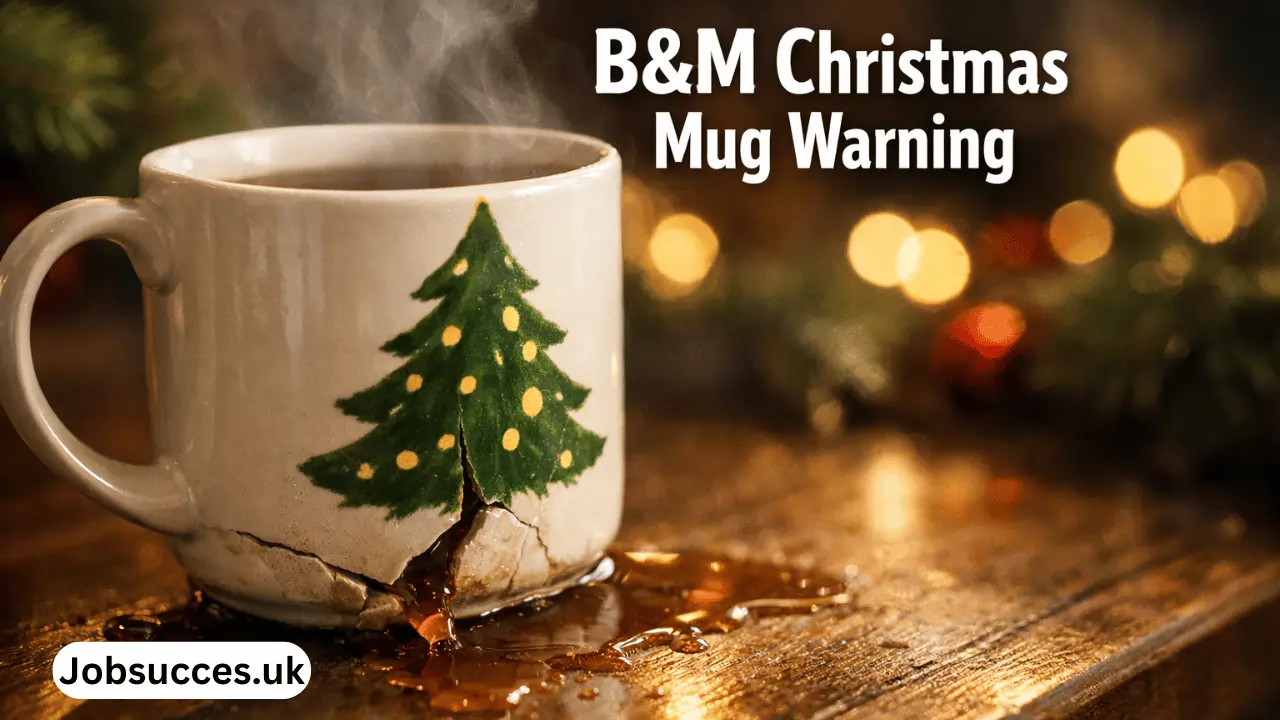
The core of the b&m christmas mug warning comes down to a structural failure that should never have passed basic safety checks. The mug in question had a base that could crack or give way when filled with hot liquid.
Not chipped. Not worn out over time. It could fail during normal use.
That distinction matters.
Hot drinks put stress on materials. Any manufacturer knows that. A mug that can’t handle heat isn’t just poorly made—it’s fundamentally flawed. The problem wasn’t cosmetic or minor. It created a real risk where boiling liquid could spill instantly onto hands, laps, or surfaces.
The b&m christmas mug warning wasn’t about caution—it was about immediate action.
Why the recall happened so quickly
The speed of the response tells its own story. Products don’t get pulled off shelves overnight unless the risk is clear and unacceptable.
Once the issue surfaced, the recall instructions were straightforward:
- Stop using the mug immediately
- Return it for a refund
No testing at home. No “use with caution” advice. Just stop.
That urgency is what makes the b&m christmas mug warning stand out. Retailers don’t like recalls. They cost money, damage trust, and create bad press. If they move fast anyway, it means the alternative is worse.
The hidden risk in seasonal products
Seasonal items live on tight deadlines. Christmas ranges hit shelves months early, often produced in bulk under pressure. Speed becomes the priority.
That’s where things start to slip.
The b&m christmas mug warning is a clear example of what happens when production speed outweighs durability testing. A mug should go through heat resistance checks, stress testing, and repeated use simulations. If any of those steps are rushed or skipped, problems show up in real homes instead of controlled environments.
And by then, it’s too late.
This wasn’t an isolated incident
What makes the b&m christmas mug warning more concerning is that it didn’t happen in isolation. Another mug sold by the same retailer—a harvest-themed glass mug—was also recalled around the same time for a similar issue.
Same failure point. Same type of risk.
That pattern matters more than any single defective item. It suggests a broader issue with quality control rather than a one-off mistake. When multiple products fail in the same way, the problem usually sits somewhere in sourcing, manufacturing, or testing standards.
Consumers don’t see that side of the process. They just see a festive mug on a shelf.
Why mugs are more dangerous than people think
A broken mug doesn’t sound like a big deal until you think about how it’s used.
Hot tea. Coffee. Boiling water.
If a mug cracks at the base, the liquid doesn’t leak slowly. It drops. Instantly. That’s where the danger comes from. There’s no warning, no time to react.
The b&m christmas mug warning highlights something people rarely consider: everyday kitchen items carry real risk when they fail under heat.
It’s not just about inconvenience. It’s about burns.
The price factor no one wants to admit
Let’s be honest. Budget retailers attract buyers because of low prices. That’s not a criticism—it’s a reality.
But the b&m christmas mug warning forces a harder question: how low can the price go before quality starts to break?
Cheap doesn’t always mean unsafe. Plenty of affordable products are perfectly reliable. But when costs are pushed down aggressively, something has to give. Sometimes it’s material thickness. Sometimes it’s testing time. Sometimes it’s both.
You don’t see those trade-offs on a price tag.
What customers were told to do—and why it matters
The instructions given during the b&m christmas mug warning were simple: stop using the product and return it.
That sounds routine, but it carries weight.
When a company tells customers to stop using an item immediately, it’s acknowledging that continued use isn’t just inconvenient—it’s unsafe. There’s no workaround. No safer way to use it.
That clarity is important. It removes doubt.
But it also raises another issue: how many people actually follow recall notices?
Not everyone checks news updates or retailer announcements. Some mugs will stay in kitchens long after the warning, still being used, still carrying the same risk.
The gap between recall notices and real behavior
Here’s the uncomfortable truth: recalls don’t reach everyone.
A lot of people won’t hear about the b&m christmas mug warning at all. Others might see it and ignore it, assuming it won’t happen to them. That’s how risky products stay in circulation long after they’ve been flagged.
This gap between official action and real-world behavior is where accidents happen.
It’s not enough to issue a recall. The message has to stick.
How to spot potential issues before they become serious
The b&m christmas mug warning should change how people look at simple items. Not in a paranoid way, but in a practical one.
Pay attention to:
- Fine cracks near the base
- Unusual heat retention or uneven warmth
- Sounds like faint cracking when hot liquid is added
These aren’t normal. They’re early signs that something isn’t right.
Ignoring them is where problems escalate.
Retail responsibility vs consumer awareness
It’s easy to place all responsibility on retailers, and they do carry the bulk of it. They source products, set standards, and decide what goes on shelves.
But the b&m christmas mug warning also shows that consumers play a role.
Checking products. Responding to recalls. Not dismissing warnings.
Safety doesn’t end at the checkout.
Why this story resonated more than expected
There’s a reason the b&m christmas mug warning spread quickly. It wasn’t just about a mug. It was about trust.
People expect basic items to be safe. When that expectation breaks, even in a small way, it sticks. It makes people question what else might slip through unnoticed.
That’s why this incident traveled beyond a simple product recall. It tapped into something bigger: the assumption that everyday items are always reliable.
The uncomfortable takeaway
The b&m christmas mug warning isn’t just a seasonal news story. It’s a reminder that convenience and low cost sometimes come with hidden trade-offs.
Not always. But often enough to matter.
And when those trade-offs involve heat, glass, or ceramics, the consequences aren’t minor.
You don’t need to panic about every mug in your kitchen. But you should stop assuming they’re all built the same.
Because clearly, they’re not.
FAQs
1. How can I tell if my mug is part of the recalled batch?
Check the design, purchase timing, and product details. If it matches the cream and green Christmas tree mug sold during late 2025, it’s safer to stop using it and return it.
2. Is it safe to keep using the mug if it looks fine?
No. The issue involves sudden structural failure, which may not show visible signs beforehand. The risk isn’t gradual—it can happen without warning.
3. Do I need a receipt to return the mug?
In most cases, returns for recalled products are accepted without a receipt. Retailers prioritize safety over proof of purchase in these situations.
4. Are only Christmas mugs affected, or should I check others too?
While the warning focused on a specific product, similar issues were found in another mug. It’s worth checking any recently purchased mugs, especially budget glass or ceramic ones.
5. What’s the biggest lesson from this situation?
Don’t assume everyday items are risk-free. If a recall is issued, take it seriously and act on it immediately instead of waiting for visible problems.
You May Also Read: Vscompany: Why a Results-Driven Business Model Wins Across Industries