








Introduction
Anyone expecting starcrafters to fit neatly into a single category is already missing the point. What makes starcrafters interesting isn’t consistency—it’s how the same label quietly stretches across industries that don’t usually overlap. Construction suppliers, DIY communities, tool manufacturers, and even gaming circles all sit under the same umbrella, and none of them feel out of place. That overlap is where the real story sits.
The industrial backbone behind starcrafters
Strip away the branding and you’ll find that starcrafters often shows up in the construction supply chain. Not the glamorous side of the industry, but the part that actually keeps projects moving. Materials, tools, fittings—everything that gets ordered in bulk and rarely gets attention unless it’s missing.
Companies operating under the starcrafters name tend to focus on practical distribution. Tiles, paints, plumbing components, safety gear—these aren’t optional purchases. They’re recurring needs tied directly to deadlines. When contractors rely on starcrafters, they’re not looking for creativity. They want consistency, availability, and fast turnaround.
That’s where the value sits. Not in branding language, but in logistics.
In places where construction demand is constant, starcrafters becomes less of a supplier and more of a quiet partner. Builders don’t switch vendors lightly. Once trust is established, the relationship sticks because delays cost more than price differences.
And that’s the reality—starcrafters in this space survives on reliability, not marketing.
Where creativity takes over the same identity
Shift contexts and starcrafters feels completely different. In creative communities, the name carries a different kind of weight. Here, it’s tied to people making things with their hands—woodworking, painting, crafting, digital design.
The contrast is sharp. In construction, starcrafters supplies materials. In creative spaces, starcrafters becomes the identity of the people using them.
That difference matters.
Creative communities built around starcrafters don’t revolve around selling products. They revolve around sharing process. Tutorials, small projects, experimentation—it’s less about perfection and more about output. The barrier to entry stays low, which is why these communities grow fast.
There’s also a subtle shift in motivation. In industrial use, the goal is efficiency. In creative use, the goal is expression. Same name, completely different expectations.
And yet, both versions of starcrafters depend on the same core idea: building something tangible.
Why the name keeps showing up across industries
There’s a reason starcrafters keeps appearing in unrelated sectors, and it’s not accidental. The name carries a built-in narrative—creation at scale, but with intention. It feels ambitious without being technical, which makes it flexible enough to apply almost anywhere.
For construction brands, starcrafters suggests capability. For hobbyists, it suggests imagination. For tool manufacturers, it suggests precision.
Few names manage to sit comfortably in all three.
That flexibility explains why starcrafters doesn’t stay locked into one identity. Businesses adopt it because it sounds established. Communities adopt it because it feels inclusive. Neither side cancels the other out.
If anything, they reinforce it.
starcrafters and the tool economy
There’s another layer that often gets overlooked—the role of tools. Not just as products, but as part of a broader ecosystem.
Starcrafters frequently overlaps with tool manufacturing and distribution. This is where the brand leans closer to performance. Tools aren’t bought casually. They’re chosen based on durability, precision, and long-term use.
A poorly made tool ruins workflow. A reliable one becomes part of it.
In this space, starcrafters isn’t about variety. It’s about trust built over repeated use. Professionals don’t experiment much once they find what works. That loyalty turns into long-term brand strength, even if the name itself isn’t aggressively marketed.
What’s interesting is how this connects back to the creative side. The same tools used on job sites often end up in personal workshops. That crossover quietly links industrial starcrafters with creative starcrafters without either side needing to acknowledge it.
The gaming influence that won’t go away
Ignoring gaming would be a mistake. Starcrafters has an undeniable presence in gaming culture, especially among strategy game players. It’s less about official branding and more about community identity.
Players, modders, content creators—this group adopts the label in a way that feels organic. It doesn’t come from a company. It comes from shared experience.
Gaming adds another dimension: digital creation.
Unlike construction or crafting, nothing physical gets built. Yet the mindset is the same—planning, designing, executing. Whether it’s building bases, managing resources, or designing maps, the behavior mirrors real-world crafting more than people expect.
That’s why starcrafters fits here too. It reflects the act of building, even if the materials are virtual.
What actually matters when writing about starcrafters
Trying to force starcrafters into a single definition weakens the topic. The strength lies in contrast.
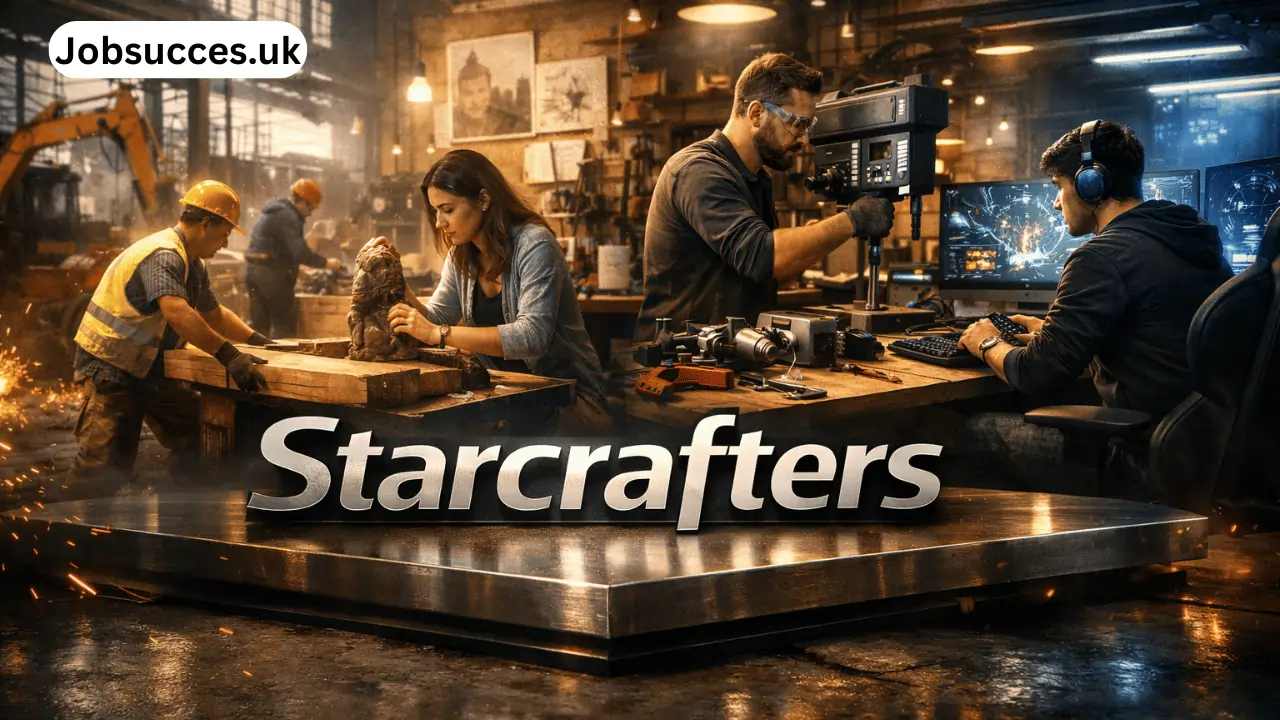
The industrial side is structured, deadline-driven, and profit-focused. The creative side is open-ended and personal. The gaming side is strategic and community-driven. Each one highlights a different kind of builder.
A strong article doesn’t flatten those differences. It leans into them.
That’s also where most content fails. It either sticks too closely to one angle or tries to merge everything into a generic narrative. Both approaches miss what makes starcrafters worth writing about.
The better approach is selective focus. Pick one angle and go deep, or compare them directly without trying to unify them artificially.
starcrafters as a reflection of modern work and hobbies
There’s a bigger pattern here. The lines between work, hobbies, and digital activity are thinner than they used to be.
Someone working with construction materials during the day might be part of a crafting community at night. A gamer managing complex systems might approach real-world projects with the same mindset.
Starcrafters sits right in that overlap.
It doesn’t represent a single profession or interest. It represents a type of behavior—people who build, experiment, and refine. That’s why the name sticks across contexts where most brands would feel out of place.
And that’s also why it keeps growing quietly instead of explosively. It doesn’t rely on trends. It aligns with habits.
The commercial reality behind the name
Despite the creative and community-driven angles, the commercial side of starcrafters shouldn’t be overlooked. Businesses using the name aren’t trying to be abstract. They’re trying to sell.
What makes them effective is how grounded their offerings are. Construction materials, tools, equipment—these aren’t impulse purchases. They’re tied to real needs with immediate consequences if something goes wrong.
That creates a different kind of customer relationship. It’s less emotional and more transactional, but also more stable. Once a supplier proves reliable, switching becomes risky.
That’s where starcrafters gains long-term traction in business environments. Not through branding campaigns, but through repeat orders.
Why starcrafters keeps expanding without central control
There’s no single authority controlling how starcrafters is used. That lack of control is part of the appeal.
It allows the name to evolve naturally. Businesses adopt it for credibility. Communities adopt it for identity. Gamers adopt it for connection.
Each use strengthens the others indirectly.
If one version disappears, the rest still hold up. That kind of resilience is rare, especially for a name that isn’t tied to one dominant company.
It also means starcrafters won’t settle into a fixed meaning anytime soon—and that unpredictability is exactly what keeps it relevant.
Final take
Starcrafters works because it refuses to stay in one lane. It connects industries that don’t usually overlap and manages to feel natural in all of them. That’s not something you can manufacture deliberately.
If you’re writing about starcrafters, don’t try to simplify it. The complexity is the story. Ignore that, and you’re left with something forgettable.
Lean into the contrast instead. That’s where it actually becomes worth reading.
FAQs
1. Is starcrafters more relevant in business or creative spaces?
It depends on the audience. In construction and supply chains, it carries practical weight. In creative communities, it feels more like an identity. Neither side dominates completely.
2. Why do different industries use the name starcrafters?
Because it suggests building and creation without locking into a specific field. That flexibility makes it easy to adopt across unrelated sectors.
3. Does starcrafters have a central brand or ownership?
No single entity controls it across all uses. Different companies and communities use the name independently, which is why it spreads so easily.
4. How does gaming connect to starcrafters?
Gaming communities use the label to reflect strategic building and creation, even in digital environments where nothing physical exists.
5. What makes starcrafters a strong topic for blogging?
It allows multiple angles—industry, creativity, tools, and gaming—without forcing them into one narrative. That gives writers room to take a clear stance instead of repeating generic content.
You May Also Read: Zeochip com: Free Movie Streaming Guide, Safety, Legal Risks and Insights