








Introduction
There’s a reason vscompany keeps showing up in different industries without feeling tied to a single identity. It behaves less like a fixed brand and more like a repeatable model—one that blends practicality, service focus, and adaptability. Ignore the label for a second, and what you’re really looking at is a style of operating that quietly fits into water management, construction, and even customer-first digital businesses without needing to reinvent itself.
Why vscompany keeps appearing across unrelated industries
What stands out about vscompany is how easily it moves between sectors. In India, it’s tied to water conservation and environmental engineering. In parts of Europe, it shows up in construction and technical services. That range isn’t accidental.
The common thread is execution over branding.
A vscompany-style operation doesn’t depend on hype or storytelling. It shows up in industries where results are measurable—water saved, infrastructure built, systems installed. That’s why it feels grounded compared to companies that rely heavily on marketing narratives.
In practical terms, vscompany fits best in industries where:
- Output is visible
- Clients expect long-term reliability
- Projects involve physical systems, not just digital products
That alone filters out a lot of noise. You won’t find vscompany thriving in spaces driven purely by trends.
The environmental side of vscompany deserves more attention
The version of vscompany working in water management is arguably the most relevant today. Water scarcity isn’t theoretical anymore, especially in urban India where groundwater depletion is accelerating.
This is where vscompany stands out—not because it’s innovative in a flashy way, but because it focuses on implementation.
Rainwater harvesting systems, for example, are not new. What matters is execution at scale. A vscompany approach prioritizes:
- Installing systems across residential and commercial buildings
- Reviving lakes and ponds instead of abandoning them
- Working with local governments rather than bypassing them
These are not quick wins. They require coordination, patience, and consistency—qualities most companies struggle to maintain.
The result is impact that doesn’t need exaggeration. When hundreds of water bodies are restored, the value speaks for itself.
vscompany in construction is all about reliability, not reinvention
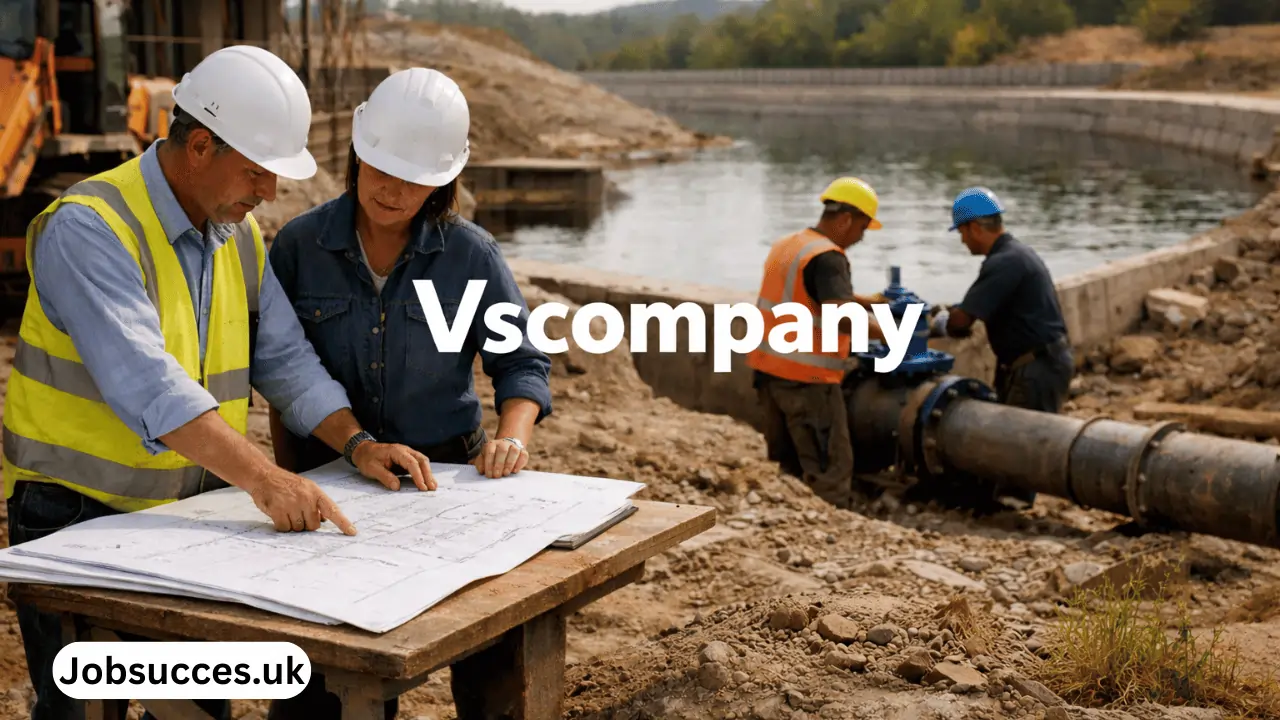
Shift to Europe, and vscompany takes on a different shape. Here, it operates in construction, electrical systems, and fire protection. The industries are older, more regulated, and far less forgiving of mistakes.
In this environment, vscompany isn’t trying to disrupt anything. It survives by doing things right the first time.
That includes:
- Electrical installations that meet strict compliance standards
- Fire protection systems that actually function under pressure
- Industrial assembly work that doesn’t cut corners
There’s nothing glamorous here, and that’s the point. A vscompany model in construction wins by avoiding failure, not chasing attention.
The hidden strength: vscompany doesn’t rely on identity
Most brands spend years trying to define themselves. vscompany doesn’t seem interested in that process at all.
Instead, it leans on a few consistent traits:
- Clear service delivery
- Practical problem-solving
- Long-term client relationships
This makes vscompany adaptable. It doesn’t get stuck defending a specific image or market position. If the demand shifts, the model adjusts without needing a rebrand.
That flexibility is underrated. Companies that over-invest in identity often struggle to pivot. vscompany avoids that trap by staying grounded in function.
Customer experience in vscompany isn’t about aesthetics
There’s a growing trend of businesses focusing heavily on user experience—clean interfaces, polished design, curated messaging. vscompany takes a different route.
Customer experience here is tied to outcomes.
If a water harvesting system works during heavy rainfall, that’s the experience.
If an electrical system runs without failure, that’s the experience.
It strips away the layers that often distract from what actually matters.
This doesn’t mean vscompany ignores presentation entirely. It just doesn’t treat it as the main value driver. The priority stays on performance.
vscompany and the economics of practicality
There’s a financial angle that explains why vscompany works in multiple industries. It avoids unnecessary costs.
You won’t see:
- Overspending on branding campaigns
- Frequent repositioning strategies
- Trend-driven product pivots
Instead, resources go into:
- Skilled labor
- Equipment and infrastructure
- Long-term project execution
This creates a more stable cost structure. It also reduces the pressure to chase rapid growth at the expense of quality.
In a market where companies burn through capital trying to scale quickly, vscompany feels almost conservative. But that conservatism often leads to survival.
Where vscompany falls short
It’s not all strengths.
The biggest limitation of vscompany is visibility. Without a strong brand narrative, it risks being overlooked. In crowded markets, perception matters—even when the work is solid.
Another issue is scalability. A model built on execution and reliability can be harder to expand quickly. Quality control becomes a challenge when operations grow beyond a certain point.
There’s also the risk of being misunderstood. Because vscompany doesn’t fit neatly into a single category, it can confuse potential clients who expect clear positioning.
These are real trade-offs, not minor flaws.
vscompany and long-term relevance
Despite its limitations, vscompany is built for longevity. It doesn’t depend on trends, and it doesn’t need constant reinvention to stay relevant.
This becomes clear when you look at industries it operates in:
- Water management isn’t going away
- Construction will always exist
- Infrastructure needs ongoing maintenance
These are not short-term markets. They reward consistency over innovation hype.
That’s why vscompany can operate quietly for years while flashier competitors come and go.
The real lesson behind vscompany
What makes vscompany worth paying attention to isn’t the name—it’s the discipline behind it.
It prioritizes:
- Doing the job properly
- Avoiding unnecessary complexity
- Delivering results that don’t need explanation
That sounds simple, but it’s rare in practice.
Most businesses drift toward overcomplication. They add layers—marketing, positioning, messaging—until the core service becomes secondary. vscompany moves in the opposite direction.
It simplifies.
vscompany in a digital-first world
There’s a question worth asking: can vscompany survive in industries dominated by digital products?
The answer is yes, but only if it keeps its core approach intact.
A digital version of vscompany would:
- Focus on functionality over design trends
- Prioritize reliability over rapid feature releases
- Build trust through performance, not branding
That’s not how most tech companies operate today. But it’s exactly why a vscompany approach could stand out.
Users eventually notice when products actually work as promised.
vscompany isn’t trying to impress—and that’s its advantage
There’s a quiet confidence in how vscompany operates. It doesn’t try to dominate conversations or define categories. It just keeps delivering.
That approach doesn’t create viral moments. It builds something more durable—credibility.
In industries where failure is expensive, credibility matters more than attention.
Final takeaway
vscompany works because it refuses to play the usual game. It doesn’t chase identity, hype, or rapid expansion. It sticks to execution, even when that means staying in the background.
That’s not a weakness. It’s a strategy most companies overlook because it’s harder to sell.
If there’s one thing to take from vscompany, it’s this: the businesses that last aren’t always the loudest—they’re the ones that keep showing up and getting the job done without needing applause.
FAQs
1. Why does vscompany appear in different industries instead of one niche?
Because it operates more like a working model than a fixed brand. It adapts to industries where execution and reliability matter more than identity.
2. Is vscompany suitable for startups or only established businesses?
It can work for startups, but only if they focus on delivering real results early instead of chasing visibility or rapid scaling.
3. What makes vscompany different from typical service companies?
The difference is in priorities. vscompany puts outcomes first and treats branding as secondary, which is the opposite of how most companies operate.
4. Can vscompany compete with highly branded companies?
Yes, especially in industries where performance matters more than perception. Over time, consistent results can outperform strong branding.
5. Does vscompany rely on innovation at all?
It does, but in a practical way. Instead of chasing new ideas for attention, it improves systems and processes that already work.
You May Also Read: Psyliq: Real Internships, Data Projects, and Career Growth Opportunities