









Introduction
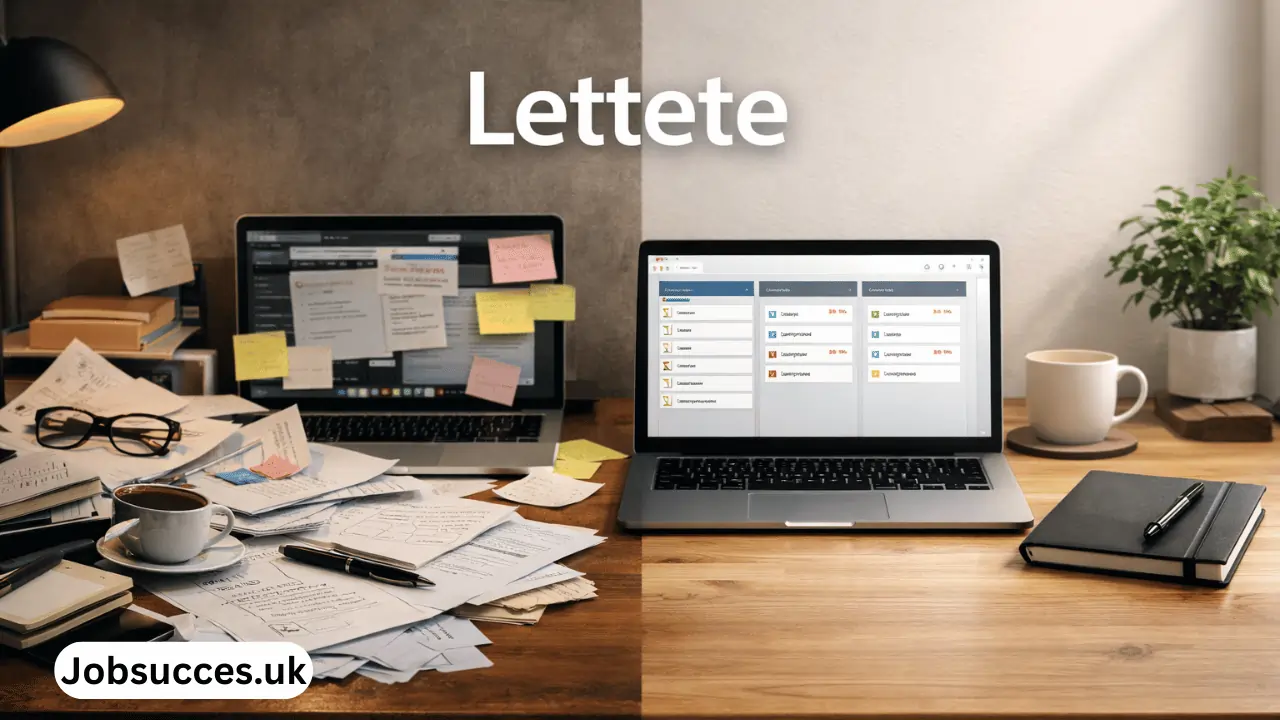
Most people don’t have a productivity problem. They have a structure problem. That’s exactly where lettete starts to matter. Not as another tool to install, but as a way to stop juggling scattered tasks, half-finished notes, and forgotten priorities. The difference shows up quickly: less noise, clearer direction, and work that actually gets finished.
Why lettete feels different from traditional productivity setups
Traditional systems ask you to adapt to them. lettete flips that dynamic. It fits into how people already think and work, which is why it tends to stick longer than rigid frameworks.
Instead of forcing users into predefined categories or complicated workflows, lettete leans into flexibility. A student tracking assignments, a freelancer managing clients, and a small business owner handling operations can all use the same structure without friction. That adaptability is not a bonus—it’s the core advantage.
Another shift is how lettete reduces decision fatigue. Most productivity tools overwhelm users with options: tags, filters, labels, boards, timelines. With lettete, the focus stays on clarity. What needs to be done, when, and why. That’s it.
The real reason people stick with lettete
People don’t continue using systems because they’re powerful. They stick with systems that feel effortless after a few days.
lettete earns its place by removing small annoyances that usually cause abandonment. No constant restructuring. No need to “maintain” the system. Once tasks are entered, they stay visible and actionable without extra work.
There’s also a psychological effect. When tasks are centralized in lettete, users stop relying on memory. That alone reduces stress. You’re no longer carrying unfinished work in your head, trying to remember what comes next.
And that’s where consistency builds. Not through discipline, but through reduced friction.
Where lettete actually improves daily workflows
The biggest improvements show up in everyday situations, not big strategic planning.
Take a typical workday. Emails come in, messages pile up, tasks appear from different directions. Without structure, everything feels urgent. lettete changes that by giving each task a place immediately.
Instead of reacting, you start sorting. That shift alone makes a noticeable difference.
For freelancers, lettete keeps client work from blending together. Each project stays separate, deadlines stay visible, and nothing gets buried.
For students, lettete becomes a single reference point. Assignments, notes, and reminders live in one place, which cuts down the chaos before exams or submissions.
For small teams, lettete reduces back-and-forth. Everyone knows what’s pending without asking.
The hidden cost of not using lettete
People underestimate how much time is lost to disorganization. It’s not just missed deadlines—it’s the constant switching between tools, searching for information, and rethinking priorities.
Without a system like lettete, work gets duplicated. Notes get rewritten. Tasks get forgotten and then rediscovered at the worst time.
That inefficiency compounds. Ten minutes here, fifteen minutes there. By the end of the week, hours are gone.
lettete cuts that waste by keeping everything accessible. Not just stored, but usable. That distinction matters.
How lettete handles complexity without becoming complicated
Complex work doesn’t need complicated systems. That’s a mistake many tools make.
lettete handles layered tasks by keeping visibility high. Large projects can be broken down without losing the bigger picture. You can track progress without getting lost in details.
There’s also a natural hierarchy. Daily tasks, ongoing work, and long-term goals don’t compete for attention. They sit in their own space but remain connected.
That balance is hard to achieve, and it’s where lettete stands out. You’re not simplifying the work—you’re simplifying how you interact with it.
Why most people misuse lettete at the start
The biggest mistake is overbuilding.
People try to recreate complex systems inside lettete. They add unnecessary categories, over-organize tasks, and turn something simple into another burden.
That defeats the purpose.
lettete works best when it stays lean. Capture tasks quickly. Review them regularly. Act on them without overthinking structure.
Another mistake is inconsistency. Using lettete for a few days and then falling back to scattered notes breaks the flow. The system only works when it becomes the default place for everything.
lettete in a professional setting
In a work environment, lettete quietly improves accountability. Not through tracking people, but by making work visible.
Managers don’t need constant updates. Teams don’t need repeated reminders. The work speaks for itself because it’s organized clearly.
Meetings also become shorter. Instead of discussing what needs to be done, teams can focus on progress and decisions.
That shift saves time and reduces frustration. And over time, it builds a more focused work culture.
The role of lettete in long-term productivity
Short bursts of productivity are easy. Sustaining it is the real challenge.
lettete supports long-term consistency by removing the need for constant resets. You don’t need to rebuild your system every few weeks. It evolves naturally as your workload changes.
That stability matters more than any feature.
It also allows users to track patterns. What gets delayed, what gets completed quickly, where time is actually spent. Those insights don’t require analytics—they become obvious through daily use.
When lettete doesn’t work (and why)
lettete isn’t a fix for procrastination or lack of direction. If someone avoids tasks entirely, no system will solve that.
It also struggles when users expect automation to replace thinking. lettete supports decisions—it doesn’t make them.
Another limitation shows up when teams refuse to adopt a shared structure. If everyone uses it differently without coordination, the clarity breaks down.
But those aren’t flaws in lettete. They’re gaps in how it’s used.
Making lettete part of your routine without forcing it
The best way to adopt lettete is to start small.
Use it for daily tasks first. Nothing complex. Just a clear list of what needs to be done.
Then expand. Add ongoing work. Track deadlines. Gradually move everything into one place.
The key is repetition. Open lettete daily. Update it. Trust it.
Once that habit forms, the system becomes invisible. You’re no longer thinking about managing tasks—you’re just doing the work.
Why lettete is gaining quiet traction
There’s a shift happening away from overloaded productivity systems. People are tired of tools that promise everything but require constant effort.
lettete fits into that shift by doing less—and doing it better.
It doesn’t try to impress. It tries to stay useful.
And that’s why it spreads quietly. Not through hype, but through results.
Final thought
lettete works best when you stop trying to perfect it. The more you treat it as a simple extension of your thinking, the more effective it becomes. The real advantage isn’t in features or structure—it’s in how quickly you can move from planning to action without getting stuck in the system itself.
FAQs
1. How long does it take to get comfortable using lettete daily?
Most people settle into it within a week. The key is using it every day without skipping, even for small tasks.
2. Can lettete replace multiple productivity tools?
In most cases, yes. When everything is centralized properly, separate apps for notes, tasks, and reminders become unnecessary.
3. Is lettete better for individuals or teams?
It works well for both, but the impact is more noticeable in teams where visibility reduces communication gaps.
4. What’s the biggest mistake beginners make with lettete?
Trying to over-structure everything from the start instead of keeping it simple and letting the system grow naturally.
5. Does lettete work for long-term goal tracking?
Yes, as long as goals are broken into actionable steps and reviewed regularly instead of being left static.
You May Also Read: Imogenwalker3: Quiet Digital Identity That Builds Curiosity and Lasting Attention