








History is full of famous leaders, but few are as colorful as Bonnie Prince Charlie. He was a man with a big dream: to take back the British throne for his family. While many people think of him as a hero from a storybook, his real life was full of danger, Narrow escapes, and tough choices. To understand Bonnie Prince Charlie, we have to look at the man behind the myths and the famous songs. He wasn’t just a prince; he was a symbol of hope for many people in Scotland who wanted to change the world.
Even today, people talk about him with a sense of wonder. You might have heard his name in folk songs or seen a famous Bonnie Prince Charlie portrait in a museum. He had a way of making people believe in him, even when the odds were stacked against his success. In this article, we will explore his journey from a royal palace to the misty mountains of the Highlands. We will see how he lived, how he fought, and what finally happened to him after his biggest battle ended in a sad defeat.
Who is Bonnie Prince Charlie?
If you are wondering who is Bonnie Prince Charlie, the answer starts with his birth in Italy in 1720. His real name was Charles Edward Stuart. He was the grandson of King James II, who had lost his crown years before. Charles grew up believing that it was his destiny to return to Britain and become king. This is why was he called Bonnie Prince Charlie by his followers. “Bonnie” is a Scottish word that means handsome or attractive. People loved his charm and his brave spirit, which made them want to follow him into battle.
His supporters were known as Jacobites. They believed the Stuart family were the rightful rulers. Because he was young and full of energy, he was also called the “Young Pretender.” This doesn’t mean he was “pretending” to be a prince, but rather that he was “claiming” the throne. He spent his early years learning how to lead and waiting for the perfect moment to cross the sea. He wanted to bring his family back to power and restore what he felt was a stolen legacy.
The Bonnie Prince Charlie Family Tree
To understand his claim to the throne, we must look at the Bonnie Prince Charlie family tree. His father was James Francis Edward Stuart, and his mother was a Polish princess named Maria Clementina Sobieska. His grandfather, James II, was the last Catholic king of England, Scotland, and Ireland. This royal bloodline was very important to Charles. He felt a deep responsibility to his ancestors to win back the kingdom. His family lived in exile in Rome because they were not allowed to stay in Britain after the revolution.
Many people ask, did Bonnie Prince Charlie have a child to carry on his name? The answer is a bit complicated. He never had a “legitimate” son to take over his claim to the throne. However, he did have a daughter named Charlotte with his companion, Clementina Walkinshaw. Later in life, he married Princess Louise of Stolberg-Gedern, but they did not have any children together. Because of this, the Bonnie Prince Charlie descendants do not exist in a direct royal line today, which effectively ended the Stuart hope for the crown.
What Happened to Bonnie Prince Charlie at Culloden?
The most famous part of his story is the Jacobite Rising of 1745. Bonnie Prince Charlie landed in Scotland with only a few friends but quickly gathered an army of Highland clansmen. They won several battles and even marched deep into England. However, things turned bad at the Battle of Culloden in 1746. This was a very short but very bloody fight. Many people ask, did Bonnie Prince Charlie die at Culloden? The answer is no. He survived the battle, but his army was completely destroyed by the government forces.
The defeat at Culloden changed Scottish history forever. It was the last major battle fought on British soil. After the loss, the prince had to go into hiding. The government offered a huge reward for anyone who could catch him, but his loyal followers refused to give him up. This period of his life is where many of the most romantic legends come from. He spent months traveling through the cold, wet Highlands, sleeping in caves and disguised as a servant to stay hidden from the soldiers searching for him.
How Did Bonnie Prince Charlie Escape Culloden?
The story of how did Bonnie Prince Charlie escape Culloden is like an action movie. After the battle, he was a wanted man. He had to travel across dangerous islands and rough seas. His most famous helper was a brave woman named Flora MacDonald. She helped him dress up as an Irish spinning maid named “Betty Burke” so they could sail past the government boats. This daring plan worked perfectly, and they reached the Isle of Skye safely. This escape is the reason the famous Bonnie Prince Charlie song, the “Skye Boat Song,” was written.
The prince eventually found a French ship that took him back to Europe. While he was safe from the executioner, he never returned to Scotland again. He spent the rest of his life traveling between different countries, hoping to get help for another invasion. Sadly, no one was willing to give him another army. His escape became a symbol of Scottish bravery, but for the prince himself, it was the beginning of a long and lonely life away from the land he tried to rule.
What Happened to Bonnie Prince Charlie After Culloden?
Life was not easy for the prince after he left Scotland. If you wonder what happened to Bonnie Prince Charlie in his later years, the truth is quite sad. He moved around Europe, living in France and Italy. He struggled with the disappointment of losing his kingdom. He turned to drinking to cope with his sadness, which caused him many problems with his friends and family. The “Bonnie” prince who was once so full of hope became a bitter and tired older man living in Rome.
He still called himself the king, even though no one else did. He spent his time remembering the glory days of the 1745 rising. He felt that he had let down the clans who fought for him. Even though he lived in a beautiful palace, he was far away from the mountains and people he loved. He became a shadow of his former self, and the European kings who once supported him eventually lost interest in his cause. It was a tragic end for someone who had come so close to greatness.
How Did Bonnie Prince Charlie Die?
Many students ask, how did Bonnie Prince Charlie die? After years of poor health, he passed away in Rome on January 31, 1788. He was 67 years old. He suffered from a stroke, which was likely made worse by his lifestyle and the stress of his exile. He was buried in Frascati Cathedral, but his heart was later moved to St. Peter’s Basilica in the Vatican. There is even a Bonnie Prince Charlie death mask that was made to preserve what he looked like at the very end of his long journey.
His death marked the end of the Jacobite dream. Without a clear leader to take his place, the movement to put a Stuart back on the throne faded away. While he died in Italy, his spirit remained in Scotland through stories and poems. He didn’t die in battle like a hero, but he lived long enough to see his name become a permanent part of history. Today, he is remembered more for the legend he created than for the king he failed to become.
Bonnie Prince Charlie in Outlander
In recent years, a new generation has discovered him through the show Outlander. The character of Outlander Bonnie Prince Charlie is played as a very determined but sometimes misguided leader. The show does a great job of showing how his presence in Scotland changed the lives of the Highland people. Fans of the series often look up Bonnie Prince Charlie Outlander to see how much of the TV story is actually true. While some parts are made up for drama, the show captures the tension and the high stakes of the 1745 rebellion.
The show also highlights the fashion of the time. You might see the famous Bonnie Prince Charlie jacket or the traditional Bonnie Prince Charlie shirt worn by the characters. These clothing items are still popular today for formal Scottish events like weddings. Seeing the prince on screen helps people visualize what the struggle was like. It reminds us that behind the history books, there were real people with fears and dreams fighting for what they believed was right.
Bonnie Prince Charlie Portrait and Symbols
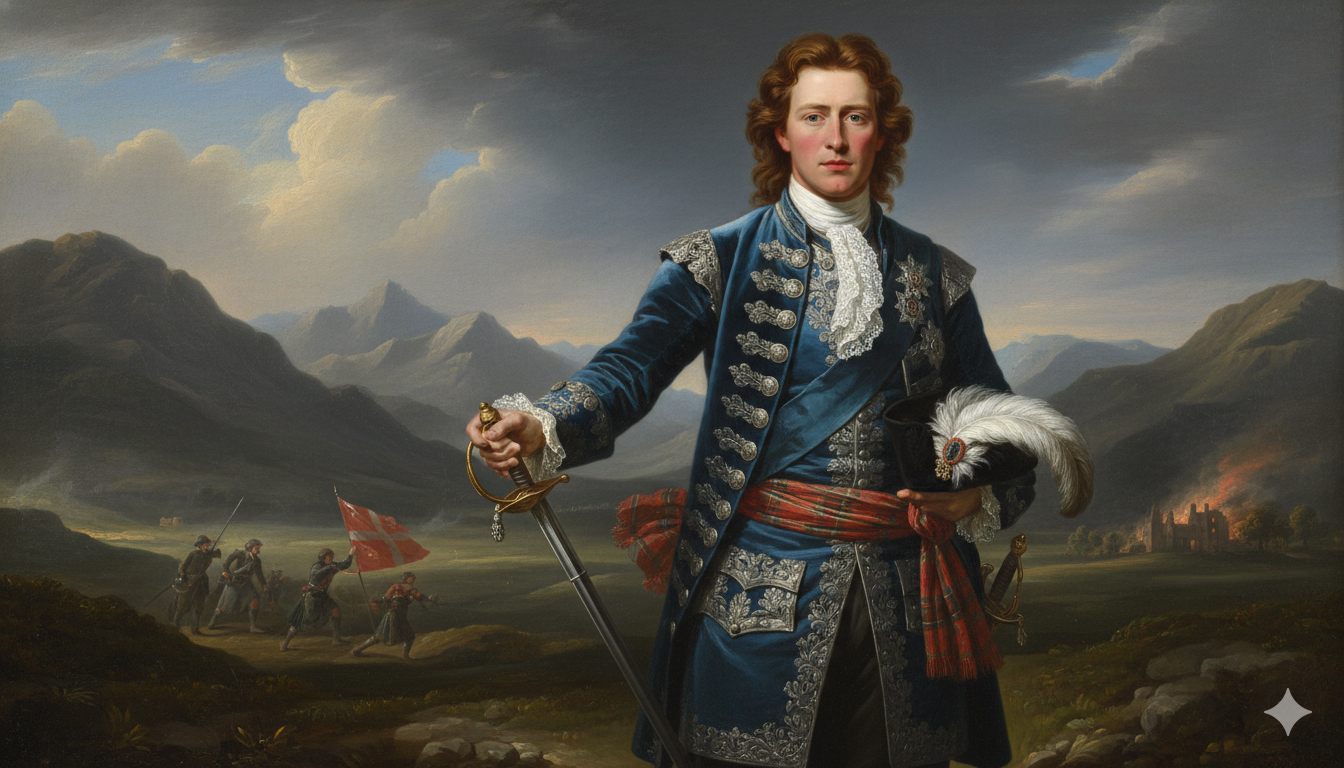
If you look at a Bonnie Prince Charlie portrait, you will see a man dressed in fine silk and often wearing a tartan sash. He used these images to show that he was both a sophisticated European prince and a true leader of the Scots. These paintings were like the social media of the 1700s; they helped spread his image to people who had never met him. Another interesting item is the Glenfiddich Bonnie Prince Charlie tribute, which shows how his name is still used today to represent Scottish heritage and quality.
Everything about his appearance was designed to inspire trust. Even the way he dressed was a political statement. By wearing tartan, he was telling the Highlanders, “I am one of you.” By wearing his royal medals, he was telling the world, “I am your king.” These symbols were very powerful and helped him build an army out of nothing. Today, these portraits are valuable historical records that help us see the “Bonnie” face that charmed an entire nation.
Biography Table: Bonnie Prince Charlie at a Glance
| Detail | Information |
|---|---|
| Full Name | Charles Edward Louis John Casimir Sylvester Severino Maria Stuart |
| Common Name | Bonnie Prince Charlie / The Young Pretender |
| Birth Date | December 31, 1720 |
| Place of Birth | Rome, Italy |
| Father | James Francis Edward Stuart |
| Mother | Maria Clementina Sobieska |
| Main Conflict | Jacobite Rising of 1745 |
| Famous Battle | Battle of Culloden (1746) |
| Spouse | Princess Louise of Stolberg-Gedern |
| Children | Charlotte Stuart, Duchess of Albany |
| Death Date | January 31, 1788 |
| Place of Death | Rome, Italy |
| Legacy | Subject of the “Skye Boat Song” and Outlander |
Export to Sheets
Conclusion: The Everlasting Prince
Bonnie Prince Charlie remains one of the most famous figures in history because his story has everything: royalty, war, adventure, and a tragic ending. He was a man who dared to chase a dream that seemed impossible. Even though he didn’t become king, he won a permanent place in the hearts of people who love Scottish culture. His journey reminds us that even when we fail, the courage we show can inspire people for hundreds of years.
Whether you know him from a history book, a Bonnie Prince Charlie song, or a TV show, his impact is undeniable. He represents the “lost cause” that people still find beautiful and romantic. Next time you hear a bagpipe or see a piece of tartan, think of the young prince who sailed across the sea to claim a crown. What do you think of his choices? Would you have helped him escape after Culloden? Let us know your thoughts on this legendary figure!
Frequently Asked Questions (FAQs)
1. Who was Bonnie Prince Charlie? He was the grandson of King James II and the leader of the Jacobite Rising in 1745. He wanted to reclaim the British throne for the Stuart family.
2. Why was he called Bonnie Prince Charlie? He was called “Bonnie” because he was considered very handsome and charming. It was a nickname given to him by his loyal Scottish supporters.
3. Did Bonnie Prince Charlie die at Culloden? No, he survived the battle. He spent several months hiding in the Highlands before escaping to France.
4. What happened to Bonnie Prince Charlie after the rebellion? He lived the rest of his life in exile in Europe, mostly in France and Italy. He never returned to Scotland and died in Rome in 1788.
5. Did Bonnie Prince Charlie have a child? He had one daughter named Charlotte with his mistress, but he did not have any legitimate children with his wife to carry on the royal claim.
6. Is the “Skye Boat Song” about him? Yes! The song tells the story of his famous escape to the Isle of Skye with the help of Flora MacDonald after his defeat at Culloden.