









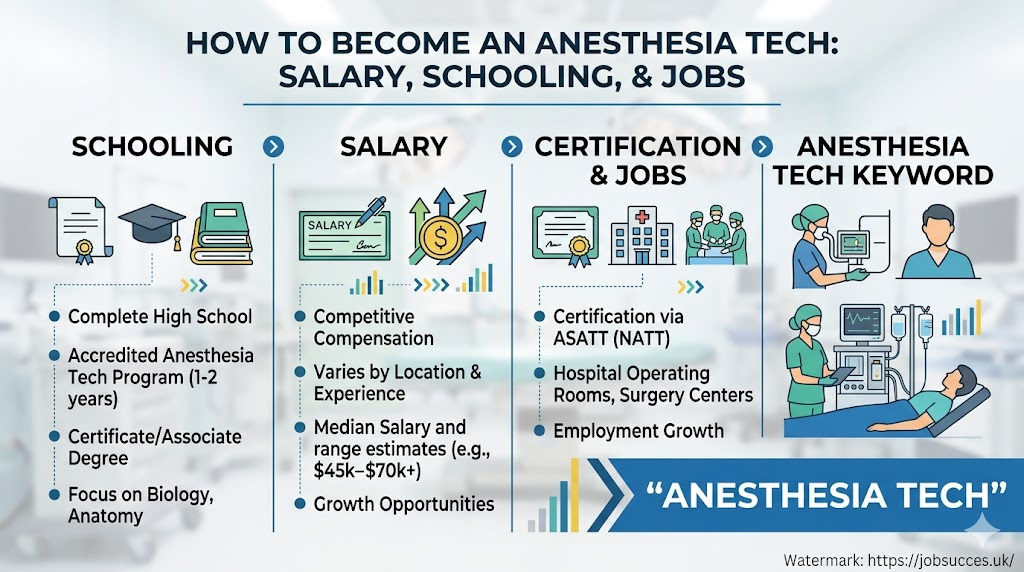
The operating room is a fast-paced place where a dedicated team saves lives every single day. While doctors and nurses get a lot of the spotlight, another vital professional keeps everything running smoothly behind the scenes. If you want a meaningful career in healthcare without spending a decade in college, you should look into becoming an Anesthesia Tech. This job lets you work directly in the medical field quickly while making a real difference for patients who are going into surgery.
But what exactly is this career like, and how do you get started in it? In this complete guide, we will break down everything you need to know about this exciting path. We will cover daily duties, schooling options, pay rates, and how to find the best open positions today. Let’s dive into the details and see if this medical career is the perfect fit for your future goals.
Quick Career Summary Table
| Career Aspect | Details and Fast Facts |
| Official Job Title | Certified Anesthesia Technologist / Technician |
| Average Training Time | 1 to 2 years for a certificate or degree |
| Key Certifying Body | American Society of Anesthesia Technologists and Technicians (ASATT) |
| Main Job Duties | Checking gas machines, stocking medical supplies, and helping doctors during surgery |
| Top Work Locations | Hospital operating rooms, emergency rooms, and private surgery centers |
| Job Growth Outlook | Growing quickly due to an aging population and more surgeries |
What Does an Anesthesia Tech Do?
Before you jump into a new career path, you need to understand the daily work routine. So, what does an anesthesia tech do when they clock in for their shift? These professionals are the right-hand helpers to the doctors and nurses who put patients to sleep for surgeries. Their main job is to make sure all the complicated equipment is safe, clean, and working perfectly before any medical procedure begins.
A typical day involves arriving early to clean, test, and calibrate complex anesthesia gas machines. The anesthesia tech will gather breathing tubes, IV bags, and vital medications needed for each specific patient. During a surgery, they stay close by to hand tools to the doctor and assist if a medical emergency happens. After the patient wakes up, they safely clean the room and prep the gear for the next surgery.
Key Anesthesia Tech Requirements and Skills
Working in a hospital requires a special blend of technical skills and personal traits. The basic anesthesia tech requirements start with a high school diploma or a GED equivalent. Because you will be handling heavy equipment and moving fast, you must be in good physical shape. You will spend long hours standing on your feet, and you need to be able to lift heavy boxes of medical supplies easily.
Beyond physical strength, you need a strong mind that stays completely calm under heavy stress. The operating room can face sudden emergencies, and you must follow orders quickly without panicking. Good communication skills are also vital because you will talk with doctors, nurses, and nervous patients every day. Being organized and paying close attention to tiny details will keep your patients safe from dangerous medical errors.
How to Become an Anesthesia Tech Step-by-Step
If you are wondering how to become an anesthesia tech, you will be glad to know the path is straightforward. Your first move is to earn your high school diploma and take basic science classes like biology. Next, you need to enroll in a formal training course at a college or technical school. These programs teach you about human anatomy, medical words, and how to operate complex gas machinery safely.
After finishing school, you will complete hands-on clinical training inside a real hospital operating room. This gives you practice working next to real medical teams with actual patients. Once your clinical hours are done, you should study for and pass a national test to get certified. Finally, you can create a strong resume and start applying for open positions at your local hospitals.
Finding an Anesthesia Tech Program Near Me
The best way to start your journey is to look for a high-quality school in your area. Searching online for an anesthesia tech program near me will show you local community colleges and trade schools. Make sure the school you choose is fully accredited by national medical boards so your certificate will be valid. A good program will mix classroom learning with plenty of hours inside a real hospital setting.
When comparing options, look closely at the tuition costs, class schedules, and how long the training takes. Some schools offer night classes for people who need to keep working while they learn a new trade. You can also search for anesthesia tech programs near me to see if any local hospitals offer direct training. These hospital-based programs sometimes hire you immediately right after you finish your classes and graduate.
What to Expect in an Anesthesia Tech School
Going back to school can feel scary, but the classes are highly focused on practical skills. During your time in an anesthesia tech school, you will learn how the human body reacts to different medications. Instructors will teach you how to read vital signs like heart rates, blood pressure, and oxygen levels. You will spend a lot of time in a practice lab learning to assemble and take apart medical gear.
Students also learn about sterile techniques, which means keeping tools perfectly clean so patients do not get dangerous infections. You will take quizzes, practice on medical mannequins, and learn the specific names of hundreds of surgical tools. The instructors are usually experienced medical workers who will guide you every step of the way until you feel completely confident.
Choosing the Best Anesthesia Tech Program
Not all training tracks are created equal, so you must choose your path very carefully. A dedicated anesthesia tech program usually awards you a certificate or an associate degree upon completion. Certificate programs are fast and can be finished in about one year, which gets you into the workforce quickly. Associate degrees take two full years but give you a deeper education that can lead to better promotions later.
Before you pay any tuition money, ask the school about their graduates’ job placement rates. A great school will have strong relationships with local hospitals to help you find work fast. Ask if they help students prepare for the national certification exam, as passing this test is vital for your future. Choosing a program with helpful career counselors will make your transition from student to worker much smoother.
The Value of Anesthesia Tech Certification
While some states do not legally force you to get a license, having an anesthesia tech certification is highly recommended. The main certificate is offered by the American Society of Anesthesia Technologists and Technicians, also known as ASATT. To earn this title, you must graduate from an approved school and pass a comprehensive multiple-choice test. This credential proves to employers that you truly know your stuff and can keep patients safe.
Holding this certification makes your job application stand out from other people who do not have it. Many hospitals will only hire certified workers, and they usually offer them a higher starting hourly wage. Once you get certified, you will need to take continuing education classes every few years to keep your skills sharp. This ensures you always know about the newest medical tech and latest safety rules in the field.
Understanding the Average Anesthesia Tech Salary
Money is a major factor when picking a career, so let’s look at the financial rewards. The average anesthesia tech salary is very competitive for a job that does not require a four-year degree. According to national labor data, most techs earn a stable income that supports a comfortable lifestyle. Your exact pay will depend on your experience, your certifications, and the specific state where you live.
When considering overall anesthesia tech pay, remember to factor in the excellent benefits packages that hospitals provide. You will likely get high-quality health insurance, a retirement savings plan, and paid vacation days. Some medical centers even offer cash sign-on bonuses or help pay off your student loan debt to recruit you. Overtime hours are often available, which allows you to increase your take-home pay significantly each month.
How Much Does an Anesthesia Tech Make?
If you want to look at the exact hourly numbers, you might wonder: how much does an anesthesia tech make on average? Entry-level workers usually start out earning around $22 to $25 per hour in most regular markets. As you gain experience and earn your national certification, your pay can quickly jump up to $30 or more per hour. Techs who work night shifts or weekends often get a temporary boost in pay called a shift differential.
When asking how much does a anesthesia tech make, location matters a whole lot for your wallet. Techs living in big coastal cities or states with high living costs, like California or New York, earn much more. Outpatient surgery centers often pay slightly different rates than major trauma hospitals, so check multiple employers in your town. Regular raises are common as you stay with a hospital system and prove your loyalty and skill.
Finding Anesthesia Tech Jobs Near Me
Once you finish your training and pass your exams, it is time to find a great job. Start your search by typing anesthesia tech jobs near me into major online career search engines. You can filter the search results to show entry-level positions or jobs that match your preferred working hours. Do not forget to look directly at the careers page on the websites of local hospitals and surgery networks.
Networking with people during your clinical rotations is another amazing way to discover hidden job openings before they are posted online. Let the hospital managers know that you are eager, dependable, and ready to work full-time. Landing your first anesthesia tech job might require open-mindedness about working holidays or late-night on-call shifts. Once you get a year of solid experience on your resume, finding new positions becomes incredibly easy.
Exploring Travel Anesthesia Tech Jobs
If you love visiting new places and want to maximize your income, mobile medical work is an incredible option. Experienced workers can apply for exciting travel anesthesia tech jobs through specialized medical staffing agencies. These temporary contracts usually last anywhere from 8 to 13 weeks at a busy hospital that needs urgent staffing help. The agency takes care of finding you a place to live and pays for your travel expenses.
Choosing to become a successful travel anesthesia tech allows you to see different parts of the country while earning a premium wage. These mobile positions often pay much higher rates than permanent staff jobs to make up for the constant moving around. You get to experience how different hospital systems operate, which builds your skills very fast. It is an amazing lifestyle choice for adventurous people who do not want to be tied down to one city.
The Benefits of Anesthesia Tech Travel Jobs
Taking on specialized anesthesia tech travel jobs offers perks that extend far beyond a bigger weekly paycheck. You get to build a massive professional network by working with diverse medical teams all across the nation. If you find a city or hospital you absolutely love during a contract, you can often transition into a permanent role there. Between your work assignments, you can take extended vacations without asking a boss for permission.
Hospitals rely heavily on a travel anesthesia tech to fill sudden staffing gaps caused by medical leaves or worker shortages. This means your skills will always be in high demand, giving you incredible job security wherever you choose to go. You just need to make sure your national certifications are up to date before applying for these roles. It is a thrilling way to fast-track your savings account while building an impressive healthcare resume.
Celebrating Anesthesia Tech Week
Every single year, the medical community sets aside a special time to honor these hard-working professionals. This event is known as anesthesia tech week, and it usually happens during the beautiful spring month of May. Hospitals use this time to educate other staff members about the critical role these technicians play in patient safety. It is a wonderful time of recognition filled with fun celebrations, free food, and educational gifts.
Managers often hand out awards, customized clothing, and public thank-you notes to show deep appreciation for their tech team. This special week highlights how vital these workers are to the overall success of the surgical department. It boosts team morale and helps everyone feel proud of the hard work they do in the operating room. It proves that even behind the scenes, your daily efforts are truly seen and deeply valued.
Summary and Next Steps
Becoming an anesthesia tech is a fantastic choice if you want an exciting, stable, and high-paying healthcare career quickly. With short training times, strong job growth, and great pay, this field offers amazing opportunities for anyone ready to learn. You will get to work right alongside doctors and play a direct role in keeping surgical patients safe.
If you are ready to take action, start looking up an accredited anesthesia tech program in your area today. Reach out to school counselors, ask about financial aid, and take the first step toward your new career path. The medical world is waiting for dedicated people like you to join the life-saving team in the operating room!
Frequently Asked Questions (FAQs)
How long does it take to become an anesthesia tech?
It usually takes between 1 and 2 years to complete your training. Short certificate programs take about 12 months, while an associate degree takes two full years of college classes.
Is the anesthesia tech exam hard to pass?
The national certification test requires serious studying, but it is very manageable if you pay close attention in school. Utilizing practice tests and study guides will help you pass on your first try.
Can an anesthesia tech give medication to patients?
No, techs do not legally administer medications or anesthesia gases directly to patients. Their job is to prepare the drugs, check the safety of the machines, and hand the proper items to the doctor.
Do anesthesia techs work on weekends and holidays?
Yes, because hospital surgeries happen around the clock, techs often work varied shifts. You may need to work some nights, weekends, or be on-call for sudden emergencies.
What is the difference between a technician and a technologist?
A technician usually holds a one-year certificate and handles basic equipment care. A technologist has a two-year degree, higher certification, and handles more advanced clinical duties in the operating room.
Can this job lead to other medical careers later?
Absolutely! Working in the operating room gives you amazing experience that can help you later. Many techs use their skills to become registered nurses, physician assistants, or even anesthesiologists.